Trees are beautiful, no doubt about it. But when they get too close to power lines, things can get complicated, and fast. We’re talking about potential blackouts, fires, and even serious safety risks. Understanding when cutting trees near power lines moves from routine maintenance to an emergency situation is super important for keeping your home and neighborhood safe. Our tree care services in Ottawa ensure that dangerous trees are assessed and managed by professionals before they become a threat. Let’s break down what you need to know.
Risks of Trees Growing Near Power Lines
When trees grow too close to power lines, they can quickly become a serious safety hazard rather than just a landscaping concern. They give us shade, make our yards look nice, and can even add value to our homes. But when they get too big or grow too close to power lines, they can turn into a real headache, and sometimes, a danger. It’s not just about a few leaves getting in the way; we’re talking about potential power outages, fires, and even electrocution.
Think about it: a strong wind blows, and a large branch snaps. If that branch is hanging over a power line, it can easily knock it down. This doesn’t just affect your house; it can cut power to your whole neighborhood. And downed power lines are incredibly dangerous. They might still be carrying electricity, and touching them, or even getting too close, can be deadly. It’s a situation where the consequences of inaction can be severe and far-reaching.
- Direct Contact: Branches growing into or touching power lines can cause short circuits, leading to outages and potential fires. This is especially true during wet or windy weather.
- Falling Debris: Even if a branch doesn’t directly touch a line, a heavy limb breaking off during a storm can fall onto the lines, causing damage and outages.
- Tree Instability: If a tree is leaning precariously towards the lines, or if its roots are compromised, it could fall completely, taking down poles and multiple lines with it.
- Obstructed Access: Overgrown trees can make it difficult for utility workers to access and maintain the power lines, increasing the risk of accidents during repairs.
Key Dangers of Trees Growing Near Live Wires and Power Outages
Trees and power lines just don’t mix well, and when they get too close, it can spell trouble. The danger of trees near power lines isn’t just about a few flickering lights; it can lead to some pretty serious issues.
First off, there’s the obvious risk of power outages. When branches grow too long or a whole tree falls, it can snap lines, break poles, or cause short circuits. This means your lights go out, and it can affect a whole neighborhood. It’s not just about inconvenience; these outages can disrupt businesses and essential services. Safety is a huge concern, too. Power lines that have been knocked down by a tree can still carry electricity. If someone touches a downed line or even a tree that’s touching a live wire, it can lead to severe injury or worse. Electricity always finds a way to the ground, and people can get caught in that path.
Here are some of the main problems:
- Power Outages: Trees interfering with lines disrupt electricity flow.
- Fire Risks: Sparks from branches can ignite fires.
- Electrocution Hazards: Downed or touching lines are extremely dangerous.
- Equipment Damage: Falling trees can damage expensive utility equipment.
How to Address Dangerous Trees Near Powerlines
If you see a tree growing too close to power lines, don’t go near it right away. Instead, look at the situation from a safe distance. Check for signs of trouble, such as trunks that lean, branches that are cracked, or wires that are touched. Don’t park cars under the tree and keep people and pets away from the area. Next, take pictures from far away to show how dangerous it is. After that, you should get in touch with a certified arborist or your local utility company right away. Experts will look at the risk and decide if the best thing to do is trim, prune, or cut down the whole thing. They will then work with insulated tools and controlled cutting methods to make sure that no accidents happen.
Professional Tree Cutting Around Power Lines in Ottawa
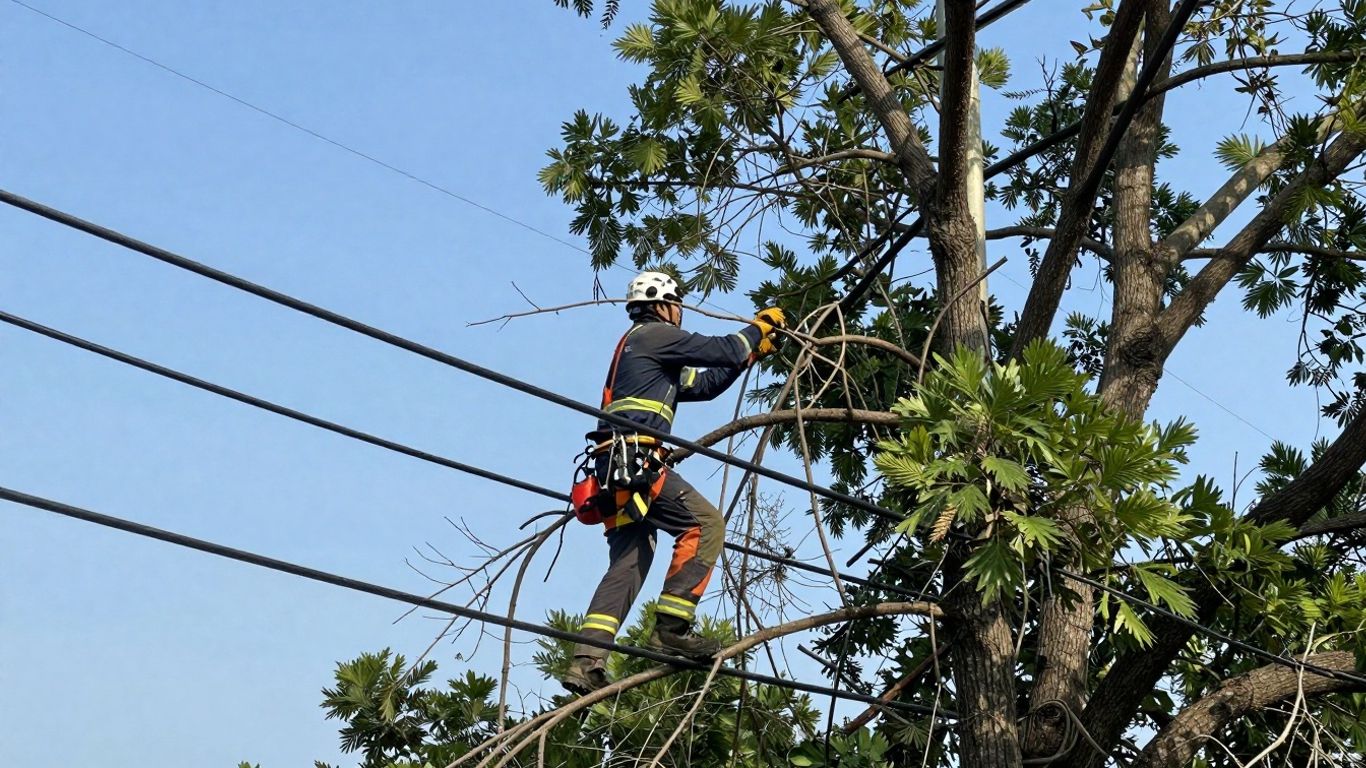
When you have trees near power lines, it’s not a DIY job. Professional tree removal around power lines is absolutely essential for safety and to keep the lights on. Utility companies and certified arborists have the training and equipment to handle this tricky work. They know how electricity can jump, or arc, from the wires to nearby objects, even if they aren’t touching. This means you can get a shock just by being too close.
Here’s a look at the general process and safety measures involved in professional tree cutting around power lines:
- Assessment: First, an arborist will look at the trees and the power lines. They check the tree’s health, its proximity to the wires, and how it might fall. They also consider the type of power lines – primary (high voltage) or secondary (lower voltage).
- Clearance Planning: Based on the assessment, they determine the necessary clearance. For primary voltage circuits, this often means a horizontal and vertical clearance of about 3 meters (around 10 feet). For secondary circuits, it might be closer to 2 meters (about 6.5 feet).
- Protective Measures: The crew will use specialized gear, like insulated tools and safety ropes. They might also de-energize certain lines if possible, though this isn’t always feasible.
- Cutting Techniques: They use specific methods for cutting tree branches near power lines and removing trees near power lines. This could involve climbing, using bucket trucks, or even dismantling the tree piece by piece from the top down to avoid dropping large sections onto the wires.
- Debris Management: After cutting, they’ll clear away the branches and wood. How this is handled can depend on the utility company’s policy and whether it’s a routine trim or an emergency removal.
When Does Cutting Trees Near Power Lines Become an Emergency?
Most of the time, dealing with trees near power lines is about regular maintenance. You know, keeping things tidy so branches don’t get too close. But sometimes, things go from “needs a trim” to “uh oh, this is a problem, like, right now.” That’s when cutting trees near power lines becomes an emergency.
What exactly triggers that emergency status? Well, it’s usually when a tree or a part of it is actively causing a dangerous situation. Think about a tree that’s leaning heavily towards the wires, looking like it could snap any second. Or maybe a large branch is already hanging precariously, just waiting for a strong gust of wind to bring it down onto the lines. These aren’t situations where you wait for your scheduled trimming appointment.
Here are some signs that you’ve moved into emergency territory:
- Visible Damage or Instability: The tree is split, cracked, or looks like it’s about to fall. This includes trees that are uprooted or have significant rot.
- Direct Contact or Imminent Threat: Branches are already touching the power lines, or a large section of the tree is positioned to fall directly onto them.
- Signs of Electrical Hazard: You see sparks, smoke, or hear crackling sounds coming from the tree or the power lines it’s near. This is a serious warning sign.
When a tree poses an immediate threat to power lines, the situation escalates quickly. It’s no longer about aesthetics or preventing future issues; it’s about averting immediate danger to people and property. The priority shifts from routine maintenance to rapid hazard mitigation.
High-Risk Tree Removal Close to Electrical Lines
When a tree gets too close to power lines, it’s not just a minor inconvenience; it’s a serious safety issue. Removing a tree near live wires involves significant risks due to electrical arcing, unstable tree movement, and unpredictable falling patterns. Electricity can jump surprising distances, even if the tree isn’t directly touching the wires. This is where professional help becomes absolutely necessary.
Several factors make tree removal near power lines a high-risk operation:
- Proximity to Live Wires: The closer the tree is to the electrical lines, the greater the risk of accidental contact and electrocution. Utility companies have specific clearance zones they maintain.
- Tree Condition: A tree that is already damaged, leaning precariously, diseased, or partially uprooted presents a much higher risk of falling unexpectedly during removal.
- Weather Conditions: Wind, rain, or snow can make the job even more hazardous, increasing the chance of branches breaking off or the tree shifting unexpectedly.
- Type of Electrical Lines: High-voltage transmission lines pose a greater threat than lower-voltage distribution lines, requiring even more stringent safety measures.
Who Is Responsible for Trees Near Power Lines?
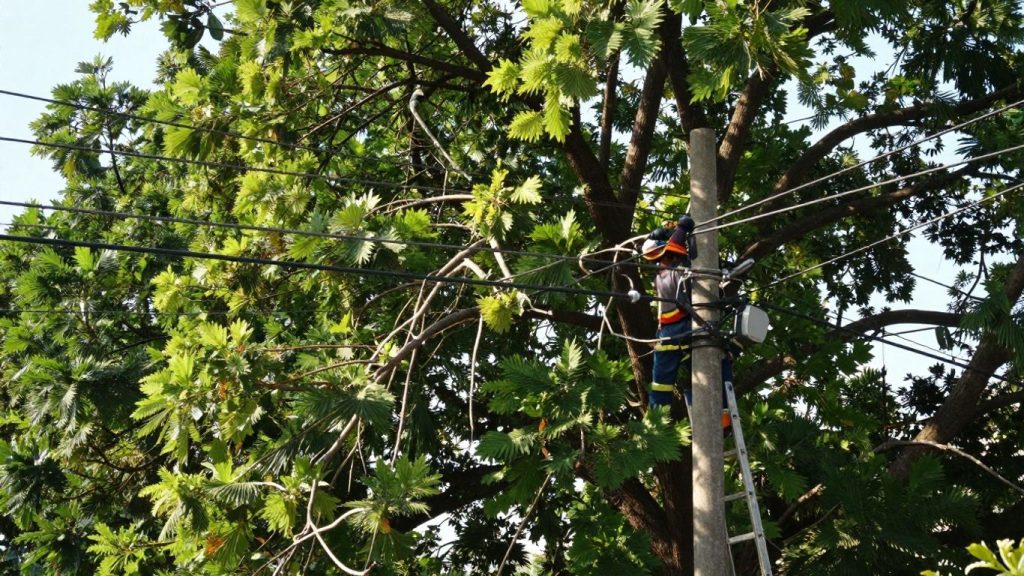
Figuring out who is responsible for trees near power lines can get a little confusing, but generally, it breaks down like this. Homeowners are usually on the hook for trees on their own property. That means if a tree on your land starts getting too big for its britches and leans towards the power lines, it’s often your job to deal with it. This is especially true if the tree is causing a problem or could cause one down the road.
Here’s a general breakdown:
- Property Owners: Responsible for trees on their land, especially if they pose a risk to power lines or public safety.
- Utility Companies: Responsible for maintaining power lines and have the right to trim or remove trees that directly threaten their infrastructure. They often handle work on the utility’s right-of-way.
- Municipalities: May be responsible for trees on public property, like along streets or in parks, and have their own guidelines for vegetation management.
Preventing Future Problems with Regular Tree Maintenance
Look, nobody wants to deal with a tree falling on their house or, worse, causing a blackout. The best way to avoid those headaches is to stay on top of your tree situation before it gets out of hand. Think of it like getting your car’s oil changed – you do it regularly to prevent bigger, more expensive problems down the road. The same idea applies to trees near power lines.
Proactive tree care is way cheaper and safer than emergency removals.
Here’s a breakdown of why keeping up with maintenance is so important:
- Early Detection: Regular check-ups mean you can spot potential issues, like a tree leaning a bit too much or branches getting too close to wires, when they’re still small and manageable. It’s much easier to trim a young sapling than to deal with a giant oak that’s practically hugging the power lines.
- Controlled Growth: Trees grow, it’s what they do. But with a little planning and occasional trimming, you can guide their growth away from sensitive areas like electrical infrastructure. This helps maintain safe distances and prevents those awkward, dangerous situations.
- Healthier Trees: Believe it or not, regular pruning actually keeps trees healthier. Removing dead or diseased limbs stops problems from spreading and makes the tree stronger overall, less likely to break in a storm.
- Cost Savings: Emergency tree removal services are expensive. Like, really expensive. Plus, you have to factor in potential damage to your property and the cost of power outages. Regular maintenance is a fraction of that price.
In Ottawa, tree cutting around power lines requires professional expertise due to strict safety regulations and local weather conditions that can increase risk.
Conclusion – Stay Safe and Call Professionals
Dealing with trees near power lines is no joke. We’ve talked about how they can cause outages, fires, and even electrocution if things go wrong. It’s easy to think you can handle a little trim yourself, but when electricity is involved, it’s just not worth the risk. Always remember that your safety and the reliability of the power grid come first.
When a tree becomes an emergency situation – like if it’s sparking, burning, or leaning precariously over the lines – you need to act fast. But even before it gets to that point, if you see a tree growing too close for comfort, it’s time to get the pros involved. They have the right gear and know-how to get the job done without anyone getting hurt.
Here’s a quick rundown of why calling professionals is the way to go:
- Safety First: They are trained to work around live electrical equipment.
- Proper Equipment: They have specialized tools for safe cutting and removal.
- Efficiency: They can often get the job done quicker and more effectively.
- Liability: You avoid the risk of causing damage or injury yourself.
Frequently Asked Questions
Why is it dangerous to have trees near power lines?
Trees near power lines are a big problem because they can cause power outages. If a tree or its branches touch a power line, it can cause electricity to jump, leading to fires or shocks. In bad weather, falling branches or entire trees can knock down power lines, which is super dangerous because downed lines can still have electricity running through them.
When does a tree near a power line become an emergency?
An emergency happens when a tree is actively sparking, smoking, or burning near a power line. It’s also an emergency if a tree is split, leaning heavily, hanging over the lines, or looks like it might fall and is a direct threat to the wires or poles. Basically, if it looks like it could cause immediate harm or a major power outage, it’s an emergency.
Can I trim trees near power lines myself?
Absolutely not! It’s extremely dangerous to try and trim trees near power lines on your own. Electricity can travel through the air, even if the tree isn’t touching the line. You could get seriously hurt or worse. Always call a professional who has the right training and equipment.
Who is responsible for cutting trees near power lines?
Usually, homeowners are responsible for trees on their own property. However, if a tree is a direct hazard to public power lines, the electric company might step in or have specific rules. It’s best to check with your local power company or a professional tree service to understand who is responsible in your area.
What should I do if I see a tree that looks like a danger to power lines?
If you see a tree that looks like it’s leaning too much, has broken branches near the lines, or seems generally unsafe around power lines, don’t try to fix it yourself. Contact your local power company right away to report it. They can assess the situation and decide if it needs professional attention.
How often should trees near power lines be maintained?
Regular maintenance is key to preventing problems. While specific schedules can vary, it’s a good idea to have trees near power lines checked periodically. Early trimming when trees are young can prevent them from becoming hazards later on. Consistent checks help catch potential issues before they become dangerous or cause outages.