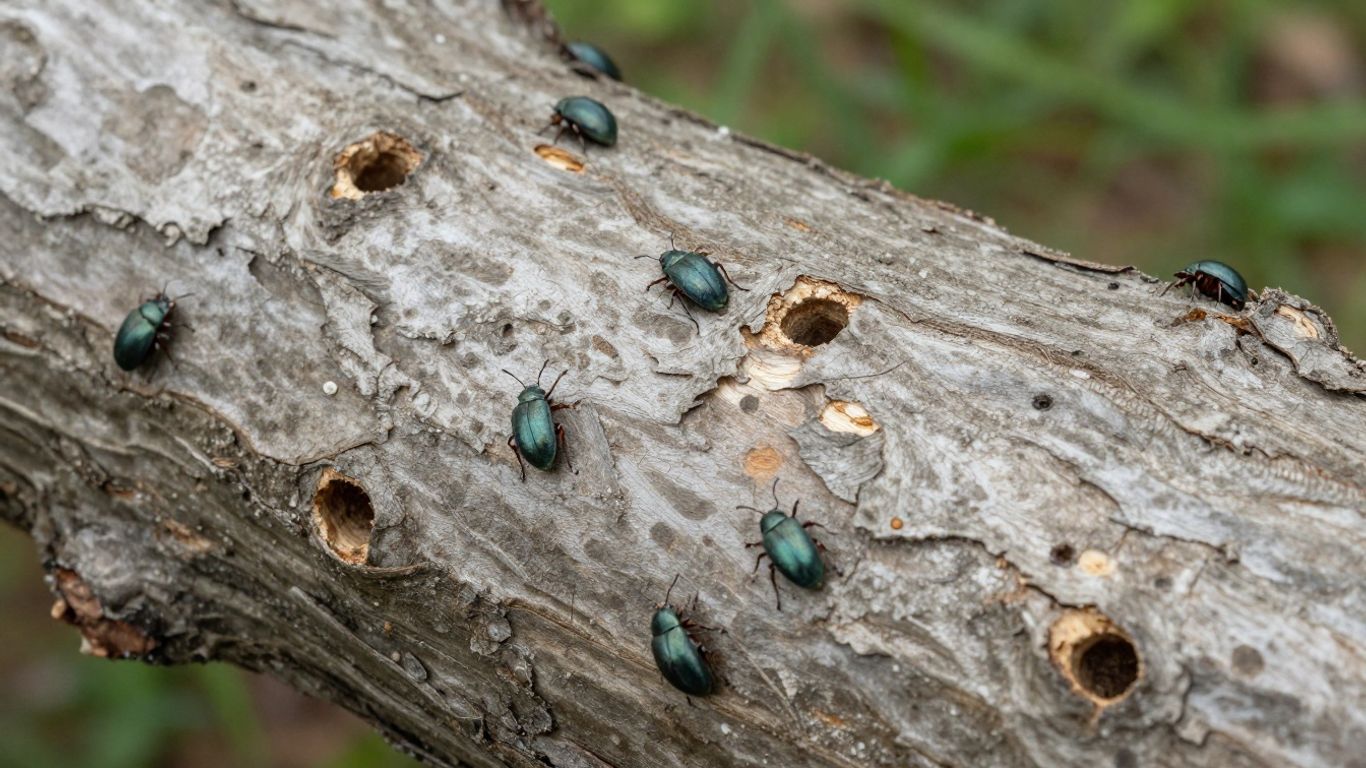
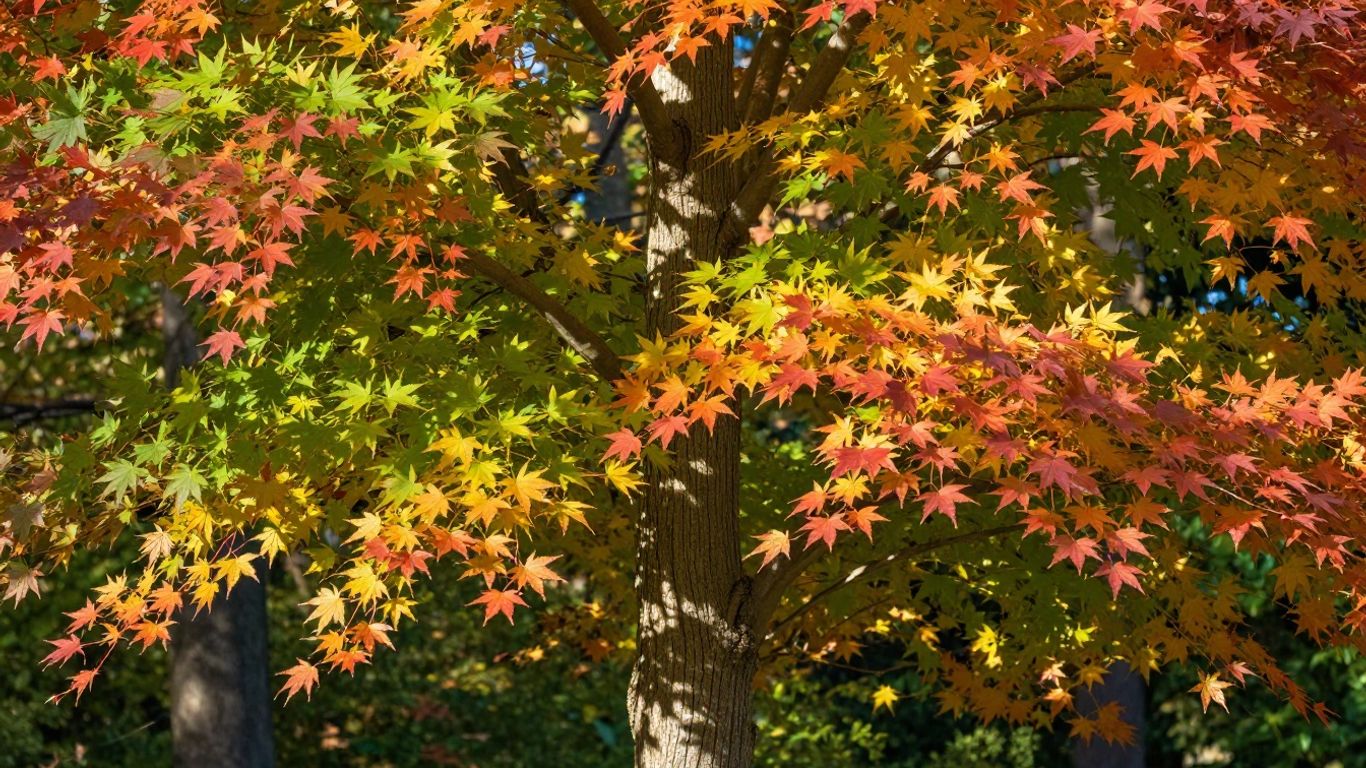
Gypsy moth damage in Ottawa has become a growing concern for homeowners and property managers. These invasive caterpillars can rapidly defoliate oak, maple, and birch trees, weakening their health and increasing the risk of disease or tree loss. Knowing how to identify early signs of infestation and understanding available treatment options can help protect Ottawa’s urban canopy.
Understanding Gypsy Moth Infestations in Ottawa
Ottawa’s trees are facing a persistent challenge from invasive insects, and the Gypsy Moth, also known as the Spongy Moth, is a significant player in this ongoing story. These moths aren’t native to our area, and because of that, they don’t have many natural enemies here. This can lead to population explosions, especially during certain years, causing noticeable leaf damage from insects in Ottawa. When their numbers get high, the caterpillars can strip trees of their leaves pretty quickly, sometimes within a few weeks. This kind of widespread defoliation really stresses trees out, making them weaker and more vulnerable to other problems like diseases or other pests. It’s a cycle that can really impact the health and longevity of our urban forest.
Here’s a quick look at what happens:
- Egg masses: Laid in late summer/early fall, these fuzzy masses overwinter.
- Caterpillars: Hatch in spring and are the main culprits, munching on leaves.
- Pupae: Caterpillars form cocoons to transform into moths.
- Moths: Emerge in summer, mate, lay eggs, and the cycle repeats.
While natural factors like viruses and predators can help keep populations in check, severe outbreaks sometimes require intervention. Understanding the life cycle and the signs of infestation is the first step in managing this issue and protecting the trees that make Ottawa so beautiful. Learning about invasive tree pests can provide more context on the broader challenges facing our urban canopy.
Common Signs of Gypsy Moth Tree Damage in Ottawa
Spotting Gypsy Moth Tree Damage in Ottawa isn’t always straightforward, but there are several warning signs homeowners should watch for. One of the most noticeable symptoms is rapid leaf loss, especially during late spring and early summer when gypsy moth caterpillars are actively feeding. If you notice large sections of your trees looking bare or heavily defoliated, it could be a sign of a growing gypsy moth infestation. Early identification of Gypsy Moth Tree Damage in Ottawa can help prevent long-term stress and decline in affected trees.
Leaf Defoliation Patterns
Gypsy moth caterpillars are voracious eaters. They start by chewing small holes in the leaves, but as they grow, they can consume entire leaves, leaving behind only the main veins. You might see this damage concentrated on certain types of trees first, like oaks, maples, or birches. In severe infestations, an entire tree’s canopy can be stripped bare within a few weeks. This heavy feeding is a classic indicator of a gypsy moth problem. You might also notice that the feeding happens mostly at night, so you won’t always see the caterpillars actively munching during the day.
Visible Caterpillars and Egg Masses
As the caterpillars grow, they become quite noticeable. They’re typically dark-colored, hairy, and have a distinctive pattern of blue and red spots along their backs – usually five pairs of blue spots followed by six pairs of red spots. They can reach about 2.5 cm in length. You might see them crawling on the tree trunks and branches, especially in the morning or evening. Later in the season, typically by late July, you’ll start seeing the egg masses. These look like fuzzy, tan or grayish patches, often about the size of a quarter or larger, laid on tree trunks, branches, and even nearby structures. Finding these egg masses is a strong sign that you’ll have caterpillars to deal with next year.
Webbing and Silk Trails
While not as prominent as with some other pests, you might observe some webbing, especially from younger caterpillars. They can create silken threads that help them move around or protect them. You might also see silk trails on the bark. This isn’t usually the thick, dense webbing you see with tent caterpillars, but it’s another subtle clue that something is going on. If you see these signs, it’s a good idea to check the leaves and bark more closely for the caterpillars themselves or signs of their feeding. Recognizing these Ottawa tree infestation signs early can make a big difference in managing the gypsy moth damage to trees.
The Risks Associated with Gypsy Moth Damage in Ottawa
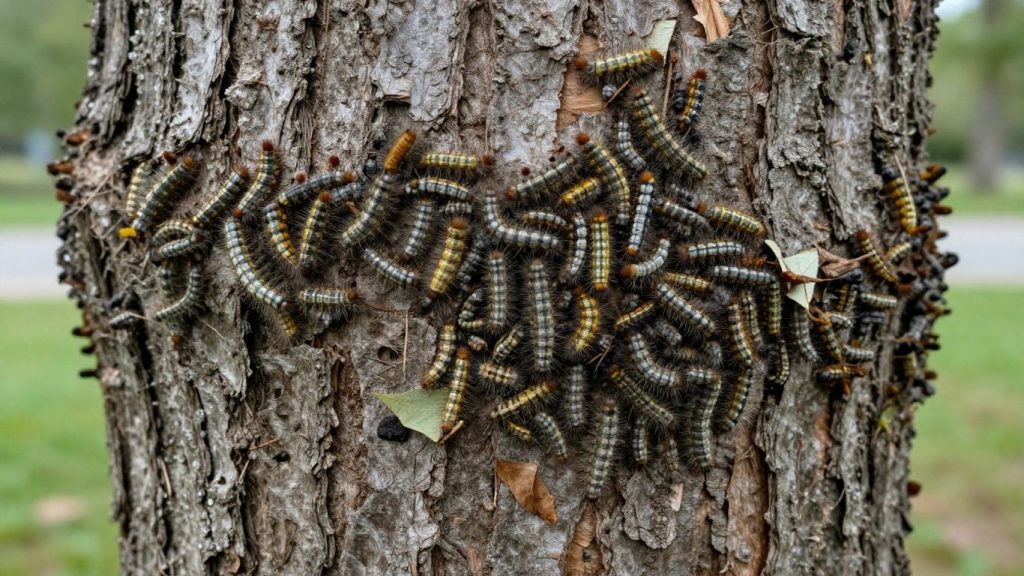
When gypsy moths get a serious foothold in Ottawa, it’s not just about a few chewed leaves. These critters can really stress out trees, making them weak and more likely to get sick from other things. Think of it like a person getting run down – they catch colds easier. Trees are no different. A tree that’s been heavily defoliated might not survive a tough winter or a dry spell.
Impact on Tree Health and Longevity
Repeated defoliation is the biggest worry, as it can eventually kill a tree. Even if a tree bounces back one year, if it happens again and again, its energy reserves get depleted. This makes them prime targets for other problems like boring insects or fungal diseases that wouldn’t normally be able to take hold. Over time, this constant battle weakens the tree, shortening its lifespan and making it a hazard. It’s a slow decline that can be hard to spot until it’s too late.
Ecological and Aesthetic Consequences
Beyond individual trees, large-scale gypsy moth outbreaks change the whole look and feel of our green spaces. Imagine a park where all the mature oaks are just skeletons of leaves. It’s not just ugly; it impacts the wildlife that depends on those trees for food and shelter. Birds might nest less, and other insects that rely on healthy trees suffer too. It messes with the natural balance. Plus, dealing with dead or dying trees can be expensive and a safety concern, especially in populated areas. It really changes the character of our neighborhoods and natural areas. The spread of invasive species like the gypsy moth can have long-lasting effects on the local environment.
Treatment and Management Options for Gypsy Moth Infestations
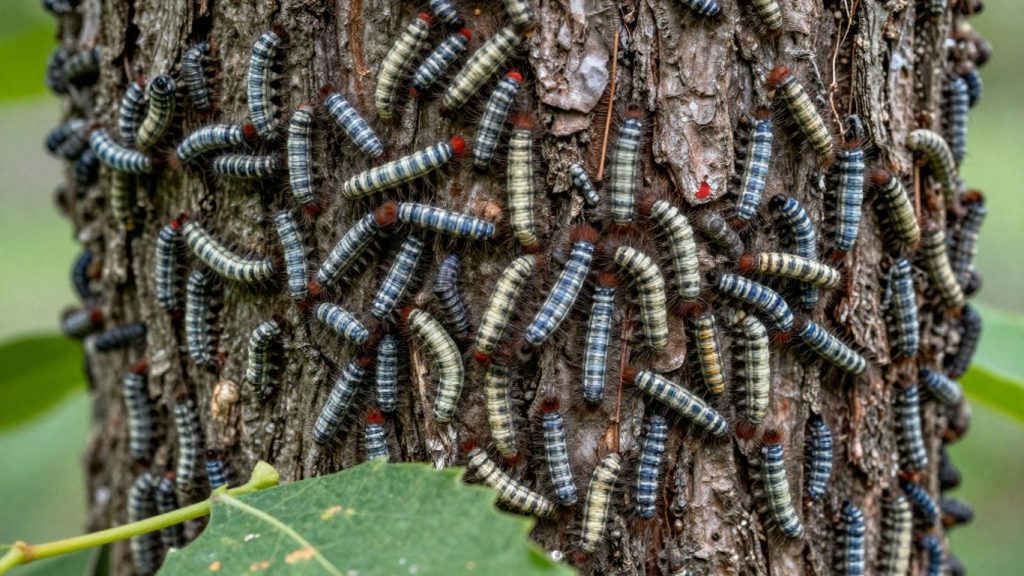
Dealing with gypsy moths on your property can feel overwhelming, but there are definitely ways to tackle them. The best approach often depends on what stage the moths are in and the time of year. Early intervention is key to minimizing damage.
For homeowners, a localized approach is usually most practical. If you spot egg masses, typically found from August to mid-April, you can physically remove them. Just scrape them off the bark and dispose of them – maybe in soapy water – to make sure they don’t hatch. It’s a bit tedious, but it directly reduces the number of caterpillars that will emerge.
When the caterpillars hatch in mid-spring (mid-April to May), you have a couple of options. For smaller infestations, you might consider applying a biological pesticide. These are generally safe for beneficial insects and the environment. Later, as the caterpillars get bigger (mid-May to June), you can try banding trees with burlap. The caterpillars will crawl under the burlap to hide during the day, and you can then collect and destroy them. This is a hands-on method that can be quite effective for individual trees.
Here’s a quick look at what you can do based on the moth’s life stage:
- Egg Masses (August – Mid-April): Scrape and remove them.
- Early Caterpillars (Mid-April – Mid-May): Apply biological pesticides.
- Late Caterpillars (Mid-May – June): Use burlap bands to trap and remove them.
- Pupae (June – Mid-July): Remove by hand.
Sometimes, nature does some of the work for us. Natural predators like birds and certain wasps, along with diseases like the Nuclear Polyhedrosis Virus (NPV) or the fungus Entomophaga maimaiga, can significantly reduce gypsy moth populations. Cool, wet spring weather often helps the fungus spread, leading to a natural collapse of the outbreak. You might see caterpillars hanging limply from trees, which is a sign these natural controls are active. It’s interesting how these natural enemies help keep populations in check, similar to how they affect whitemarked tussock moth populations.
For larger areas or if you’re unsure about the best course of action, contacting a professional tree care company is a good idea. They have the equipment and knowledge to apply treatments safely and effectively, especially for widespread issues.
Trees Most Affected by Gypsy Moths
Gypsy moths, or spongy moths as they’re also known, aren’t super picky eaters, but some trees in Ottawa definitely get more attention than others. They really seem to have a favorite menu, and when these trees are heavily targeted, it can really weaken them.
Common Targets
- Oaks: These are usually the top choice. Whether it’s red oak, white oak, or any other kind, gypsy moths love to munch on oak leaves. If you have a lot of oaks on your property, you’re more likely to see damage.
- Birch: Another favorite. Birch trees can be severely defoliated, which makes them look pretty rough.
- Aspen and Poplar: These are also on the menu and can suffer significant leaf loss.
- Maples: While not as preferred as oaks, maples, especially sugar maples, can still be heavily impacted during large outbreaks.
- Conifers: Sometimes, during really intense infestations, gypsy moths will even feed on softwoods like pine and fir, though this is less common and usually happens when their preferred food sources are gone.
It’s not just about the type of tree, though. Young trees, trees that are already stressed from drought or disease, or trees planted in poor soil conditions tend to fare much worse when attacked by gypsy moths. They become more vulnerable to secondary pests and diseases, which can really seal their fate. Protecting trees from forest pests like the gypsy moth often means focusing on the health of the most susceptible species first.
When to Call a Professional Tree Care Company
Spotting a few caterpillars is one thing, but a full-blown infestation is another. If you notice widespread defoliation, especially on your oak trees, or if you see large numbers of egg masses on your trees in the fall or winter, it’s probably time to get some expert advice. A professional tree care company can assess the situation, identify the extent of the problem, and recommend the best course of action. They have the tools and knowledge to help manage these outbreaks and protect your trees. You can find services that specialize in managing forest pests and offer tailored solutions for your specific situation.
Preventing Future Gypsy Moth Problems in Ottawa
Dealing with gypsy moths can be a real headache, but there are definitely things you can do to make your trees less appealing to them next time around. It’s all about being proactive and giving your trees a fighting chance.
One of the simplest, yet most effective, strategies is to keep your trees healthy. Think of it like boosting your own immune system. Healthy trees are just tougher and can handle a bit of stress better. This means making sure they get enough water, especially during dry spells, and that the soil around them is in good shape. If you’re not sure about soil quality, a simple soil test can tell you what nutrients might be missing.
Here are some practical steps you can take:
- Inspect your trees regularly. Keep an eye out for those tell-tale signs we talked about earlier – egg masses in the fall and winter, and defoliation or caterpillars in the spring and summer. Early detection is key.
- Clean up fallen leaves and debris. Gypsy moth caterpillars often overwinter in leaf litter or under loose bark. A good yard cleanup in the fall can remove some of these hiding spots.
- Avoid moving firewood. This is a big one. Invasive pests, including gypsy moths, can hitch a ride on firewood and spread to new areas. Always burn firewood where you buy it.
- Consider planting native species. Trees that are native to Ottawa are generally better adapted to the local climate and soil conditions. They tend to be more resilient to pests and diseases compared to some non-native varieties. Plus, they support local wildlife.
If you’re looking to add new trees, think about species that are known to be more resistant to gypsy moth damage. While no tree is completely immune, some just don’t seem to be as tasty to these caterpillars. Doing a little research before you plant can save you a lot of trouble down the road. You can also look into local initiatives that might offer advice or support for tree care in Ottawa pest control strategies.
Wrapping Up: Protecting Ottawa’s Trees
So, we’ve talked about how those pesky gypsy moths can really do a number on Ottawa’s trees, stripping them bare and leaving them weak. It’s a bummer, for sure, seeing our leafy friends struggle. But the good news is, we’re not totally helpless. Keeping an eye out for the signs, like chewed-up leaves or even the caterpillars themselves, is the first step. And remember, if you spot something suspicious, letting the city know can make a big difference. Working with tree pros and just generally taking good care of our trees helps them stay strong. It’s all about working together to keep Ottawa green and beautiful for everyone.
Frequently Asked Questions
What exactly is a gypsy moth and why is it a problem in Ottawa?
A gypsy moth, also known as a spongy moth, is an insect that originally came from Europe. It’s a problem because it eats the leaves of many different types of trees, especially hardwoods like oak and maple, which are common in Ottawa. When these moths appear in large numbers, they can strip trees bare, making them weak and vulnerable.
How can I tell if my trees are being damaged by gypsy moths?
Look for signs like leaves with chewed holes or completely eaten away. You might also see the caterpillars themselves, which are hairy with blue and red spots along their backs. In late summer, you might spot their egg masses, which look like fuzzy patches, on tree trunks and branches. Severe damage can make a tree look like it has no leaves at all.
Are gypsy moths the only pests harming trees in Ottawa?
No, unfortunately, Ottawa’s trees face threats from several invasive pests. Other major ones include the Emerald Ash Borer, which attacks ash trees, and the Asian Longhorned Beetle, which targets maples and other hardwoods. Sometimes, even local insects can cause trouble, especially if trees are already stressed.
What happens to trees that lose all their leaves to gypsy moths?
Losing all their leaves, called defoliation, really stresses a tree. While trees can grow new leaves, it takes a lot of energy. If a tree is defoliated for several years in a row, or if it’s already weak, it can become sick, stop growing, or even die. Weakened trees are also more likely to get other diseases or be attacked by different pests.
When is the best time to check my trees for gypsy moth damage?
The best time to look for gypsy moth caterpillars and leaf damage is usually in late spring and early summer, when they are actively feeding. You can look for egg masses in late summer or fall, which helps you know if you might have a problem the following year.
What can I do to help protect my trees or stop gypsy moths from spreading?
You can help by regularly checking your trees for signs of damage or the insects themselves. If you find them, report it to the city or relevant authorities. It’s also important not to move firewood, as pests can travel on it. Keeping your trees healthy through good care also makes them more resistant to pests.