Key Takeaways
A cedar tree can add year-round greenery, shelter, and structure to your landscape. Choosing the right kind—and matching it to your site—makes a real difference.
- “Cedar” can refer to several different kinds of evergreen trees, including true cedars and other trees with cedar in their common name.
- Check a tree’s mature size and growing needs before choosing a planting site.
- Most cedars establish best with good drainage, room for roots, and regular water while young.
- Watch for changes in foliage, since browning can result from several different stresses.
- Prune conservatively, and seek an accurate diagnosis if damage is spreading or worsening.
What Is a Cedar Tree?
The name cedar is used for more than one kind of evergreen tree. True cedars belong to the genus Cedrus, but trees such as eastern white cedar and western red cedar belong to other genera and are called cedars by common name. That distinction matters when you’re choosing a tree: growth habits and site preferences can vary considerably.
Most trees called cedars keep their foliage through the year, offering color and screening when deciduous trees are bare. Their leaves may look like short needles or overlapping scales, depending on the kind of tree. Many also produce cones, though their size, shape, and position differ among species.
Before you buy or plant a cedar tree, identify the species or cultivar rather than relying on the common name alone. A mature tree can be much wider or taller than a young nursery plant suggests, and the right choice depends on the space, climate, and purpose you have in mind. If you’re comparing true cedars, a guide to the Cedrus genus can help clarify how those trees differ from other plants called cedar. In Ottawa and across eastern Ontario, eastern white cedar is one of the most commonly planted types for hedges and privacy screens.
Types of Cedar Trees and How to Identify Them
Start by looking at the foliage, the overall shape of the tree, and any cones. A close look at leaves can be especially helpful: true cedars carry needle-like leaves in clusters on short shoots, while many commonly named cedars have scale-like foliage or flattened sprays. Don’t rely on color alone, since foliage ranges from green to blue-green and can change with the season or growing conditions.
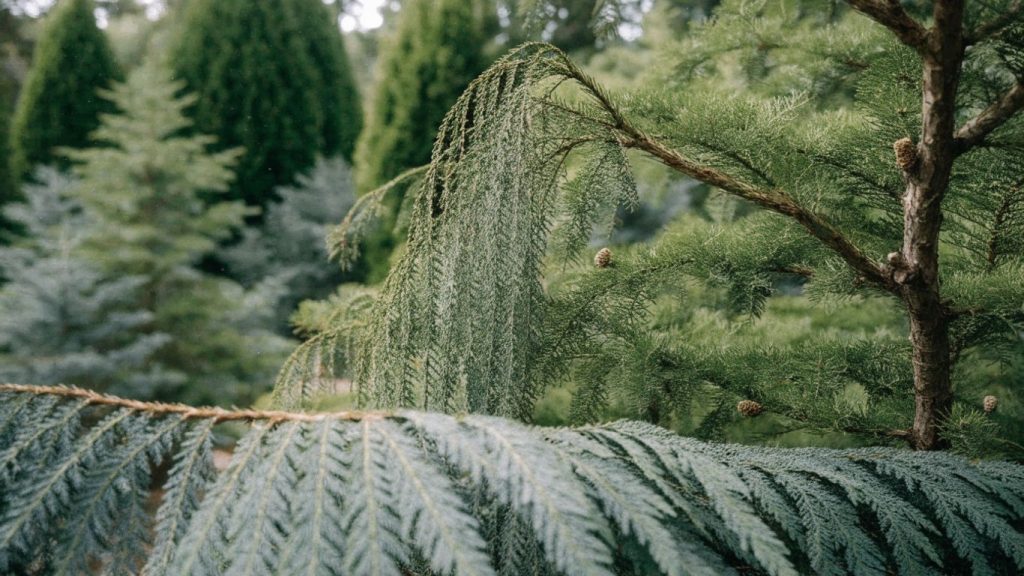
The most useful clues are the combination of leaf arrangement, growth form, and mature size. This quick comparison can help you narrow down what you’re seeing, but a local plant reference or nursery can confirm an uncertain identification.
| Common name | Useful identification clue | Typical landscape form |
|---|---|---|
| Deodar cedar | Long, often drooping needle clusters | Broad, graceful tree |
| Lebanon cedar | Dense branches and needles in clusters | Large tree with a spreading crown |
| Eastern white cedar | Flattened sprays of scale-like leaves | Narrow tree or hedge |
| Western red cedar | Flattened sprays and a tall, tapering form | Large, upright evergreen |
These names include both true cedars and trees in other genera, so the common name doesn’t tell the whole story. When choosing a tree for your yard, confirm the botanical name and check the expected size and climate needs before settling on a variety. If you’re planning a cedar hedge, factor in shaping and upkeep from the start. Our hedge and shrub trimming service can help keep it tidy as it fills in.
Cedar Tree Growth: Size, Shape, and Lifespan
A cedar’s eventual height and spread depend on its type, growing conditions, and age. Some remain compact enough for a smaller garden, while others become large trees with broad crowns and substantial root systems. The mature dimensions on a plant label are a better guide than the size of the young tree you see at the nursery.
The shape also varies. Some cedars grow upright and narrow, making them useful where you want a vertical screen; others spread outward as they age. Growth can be slower when a tree is crowded, shaded, or struggling with drought or poor drainage, so a small tree may not simply be a naturally compact one.
Many cedars can live for decades, and some live much longer when their growing needs are met. That longevity makes the planting decision worth a little extra thought: allow for future shade, clearance from buildings, and access for maintenance. A guide to cedar varieties offers another starting point for comparing the forms and characteristics of commonly grown types.
Where to Plant a Cedar Tree
Choose a site with enough room for the tree at maturity, not just enough room for the root ball. Consider the width of the crown, nearby buildings, overhead wires, paths, and the distance to other trees. If you’re planting a row for privacy, leave room for each tree to develop instead of crowding young plants together.
Think, too, about what you want the tree to do. A cedar can provide year-round screening or help define a boundary, but a variety that suits a large property may overwhelm a small yard. Pay attention to the way the sun moves across the site and to whether water tends to collect there after rain.
A good planting location makes routine care easier and reduces the chance that the tree will outgrow its space. For a broader look at choosing a tree for local conditions, see this Ontario tree planting guide. It can help you consider the site and the tree’s needs before you commit to a location.
Soil, Sunlight, and Climate Requirements
Cedar preferences vary by species, so check the needs of the particular tree you plan to grow. Many cedars do well in a sunny location, though some tolerate partial shade. Soil should support healthy root growth and drain reasonably well; persistently waterlogged ground can be a problem for trees that dislike wet roots.
Use the basic differences below as a starting point, not a substitute for checking the plant label or local advice. A tree that is well suited to your climate and soil is more likely to establish than one chosen for appearance alone.
| Site factor | What to check | Why it matters |
|---|---|---|
| Sunlight | Full sun or partial shade tolerance | Affects growth and foliage density |
| Drainage | Whether water stands after rain | Roots may suffer in persistently wet soil |
| Soil | Texture, compaction, and moisture | Influences root establishment |
| Climate | Winter hardiness and local exposure | Helps match the tree to your region |
As you assess the site, remember that drainage matters as much as sunlight for many trees. If the ground stays wet, consider another location or get advice before planting. A little observation—especially after a heavy rain—can help you avoid a difficult-to-correct mismatch.
How to Plant a Cedar Tree
Planting carefully gives a young cedar a better chance to establish. Choose a healthy tree suited to your climate, then prepare a site with enough room for its mature spread. In Ottawa, our ISA-certified arborists assess soil, sun exposure, drainage, and space to help select and plant a suitable species.
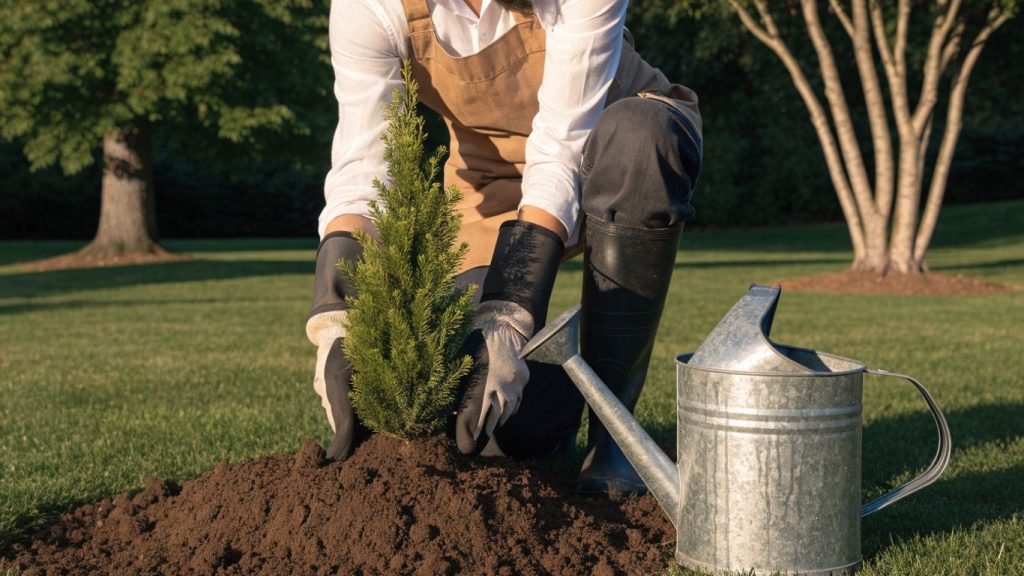
Before you dig, check for underground utilities and make sure the planting spot has adequate clearance. A simple sequence can keep the work manageable:
- Water the root ball and remove the tree from its container carefully.
- Dig a hole wider than the root ball, but no deeper than its height.
- Set the tree upright with the root flare at or just above ground level.
- Backfill with the excavated soil and water slowly to settle it around the roots.
Keep the root flare visible and avoid planting too deeply, which can interfere with the tree’s establishment. Water the soil thoroughly after planting, then monitor moisture as the tree adjusts. If you’re uncertain about the site or planting depth, you can request a tree planting estimate before beginning.
Cedar Tree Care and Maintenance
After planting, keep an eye on soil moisture, foliage, and the tree’s structure. Young cedars generally need closer attention than established ones, especially during dry weather or their first seasons in the ground. Routine observation can help you notice a problem before it becomes extensive.
For seasonal reminders on watering, mulching, pruning, and early problem detection, take a look at these practical tree care tips. Young cedars especially benefit from an early-season check-up, so see our spring tree care guide for what to look for.
Watering and Mulching
Water deeply enough to moisten the root zone, then check the soil before watering again. The goal is to avoid both prolonged dryness and constantly saturated ground. Young trees need particular attention during dry spells, while established trees may need supplemental water during extended heat or drought.
A layer of organic mulch can help moderate soil moisture and temperature. Keep mulch away from direct contact with the trunk, and don’t pile it into a tall mound. Check the soil beneath the mulch rather than watering by habit; the surface may look dry even when the root area is still moist.
Pruning and Shaping
Prune to remove dead, damaged, or crossing branches and to address a specific structural concern. Avoid cutting back into old, bare wood unless you know the species will produce new growth there; many evergreens do not readily fill in after severe cuts. Light, selective pruning is usually preferable to frequent shaping that removes large amounts of foliage.
If a branch is large, near a structure, or difficult to reach safely, leave it to a professional tree pruning service in Ottawa. A tree pruning guide can also help you understand timing, technique, and safety considerations.
Common Cedar Tree Pests and Diseases
The common cedar tree diseases and pests depend on the species, region, and growing conditions. Insects may leave holes, webbing, sticky residue, or chewed foliage; disease may show up as spots, cankers, dieback, or patches of discolored leaves. Similar symptoms can have different causes, so a visual clue alone may not be enough to identify the problem.
Look for patterns as well as individual symptoms. Note whether damage is limited to one branch or spread across the tree, when it began, and whether it followed drought, flooding, or another change in conditions. Remove fallen debris when appropriate and avoid assuming that every brown patch needs a treatment.
Our tree and plant health care service includes diagnosis of pests, diseases, and environmental issues, with management options. Reading up on common tree diseases can also help you spot early warning signs, and keep an eye out for activity in colder months too, as covered in how to handle pest infestations on trees in winter.
Why Is My Cedar Tree Turning Brown?
Browning can be a normal seasonal change, but it can also signal stress. Older inner foliage may turn brown and drop as the tree renews itself, while browning at branch tips or across large sections deserves closer attention. The timing and pattern often offer useful clues.
Dry soil, excess moisture, winter injury, root damage, and pest or disease issues can all affect foliage. Check the soil around the root zone and look for changes in drainage, recent construction, or damage to the trunk and branches. If only one side of the tree is affected, consider whether it has been exposed to harsh sun, wind, road salt, or physical injury.
Avoid treating the tree until you have a reasonable idea of the cause. Take a few photos, note when the browning started, and see whether the affected area is growing. If symptoms continue to spread, seek a diagnosis rather than applying a treatment that may not fit the problem.If the browning keeps spreading, book a tree health and risk assessment by calling 613-299-3150. If the tree has died or become unstable, tree removal may be the safest option.
Conclusion
A healthy cedar starts with a good match between the tree, the site, and the care you can provide. Identify the type, leave room for its mature size, and keep an eye on moisture and foliage as it establishes; if you’re planning a planting in Ottawa, contact us today for an estimate from Advanced Tree Solutions.
Frequently Asked Questions
How fast does a cedar tree grow?
Growth rate depends on the species, age, climate, and growing conditions. Check the mature-size information for the specific variety rather than assuming all cedars grow at the same pace.
How much sun does a cedar tree need?
Many cedars grow well in full sun, while some tolerate partial shade. Check the needs of your particular species and consider how sunlight reaches the planting site through the day.
How often should you water a newly planted cedar?
Check the soil around the root zone regularly and water when it begins to dry, adjusting for rainfall and temperature. The soil should not remain waterlogged.
Can you grow a cedar tree in a small yard?
Some varieties are more compact than others, but you should check the mature height and spread before planting. A young tree’s current size does not indicate how much room it will need later.
Why is the inside of my cedar turning brown?
Some inner foliage browning can occur as older leaves or needles are shed. If browning is extensive, appears on branch tips, or continues to spread, check for stress or damage and consider getting the tree assessed.
Should you prune a cedar tree?
Prune selectively to remove dead or damaged branches or address a clear structural concern. Avoid cutting deeply into bare old wood, since many evergreens do not readily regrow there.
When is the best time to plant a cedar tree?
Planting during a period when the ground is workable and temperatures are moderate can help reduce stress. Local conditions and the specific tree matter, so follow the nursery’s guidance for your variety.