Oak wilt has been confirmed in Ontario since 2023, and for anyone with red, white, or bur oaks on their property, the biggest risks are the avoidable ones: pruning at the wrong time of year, leaving fresh wounds exposed, and moving firewood. This oak wilt Ontario guide explains how to recognize the warning signs, how the disease moves between trees, when it is safe to prune, and what to do if an oak suddenly starts to decline.
Many other problems, including drought, root damage, and leaf diseases, can look like oak wilt, so symptoms alone cannot confirm it. Knowing the pattern and the timing of the symptoms helps you decide when to book an arborist and when to report a tree to the authorities. The Government of Ontario and the Canadian Food Inspection Agency publish the official guidance used throughout this article.
Key Takeaways
- Oak wilt is a fungal disease caused by Bretziella fagacearum. It was first confirmed in Canada in 2023 at three sites in southern Ontario: Niagara Falls, Niagara-on-the-Lake, and the Township of Springwater.
- Red oaks are the most vulnerable and can die within months of infection. White and bur oaks usually decline more slowly.
- Key warning signs are leaves browning from the tip inward, green leaves falling in July or August, and vertical cracks in the bark.
- The disease spreads through sap beetles that visit fresh wounds, through connected oak roots, and through moved firewood.
- Prune oaks between November and March, avoid wounding them from April to November, and report suspected cases to the Canadian Food Inspection Agency (CFIA).
What Is Oak Wilt Disease?
Oak wilt is a vascular disease caused by the fungus Bretziella fagacearum. The fungus grows in the outer sapwood, the layer that carries water and nutrients from the roots to the crown. As the tree reacts to the infection, its water-conducting vessels become plugged, and the leaves wilt, discolour, and fall, often in mid-summer when a healthy oak should be in full leaf.
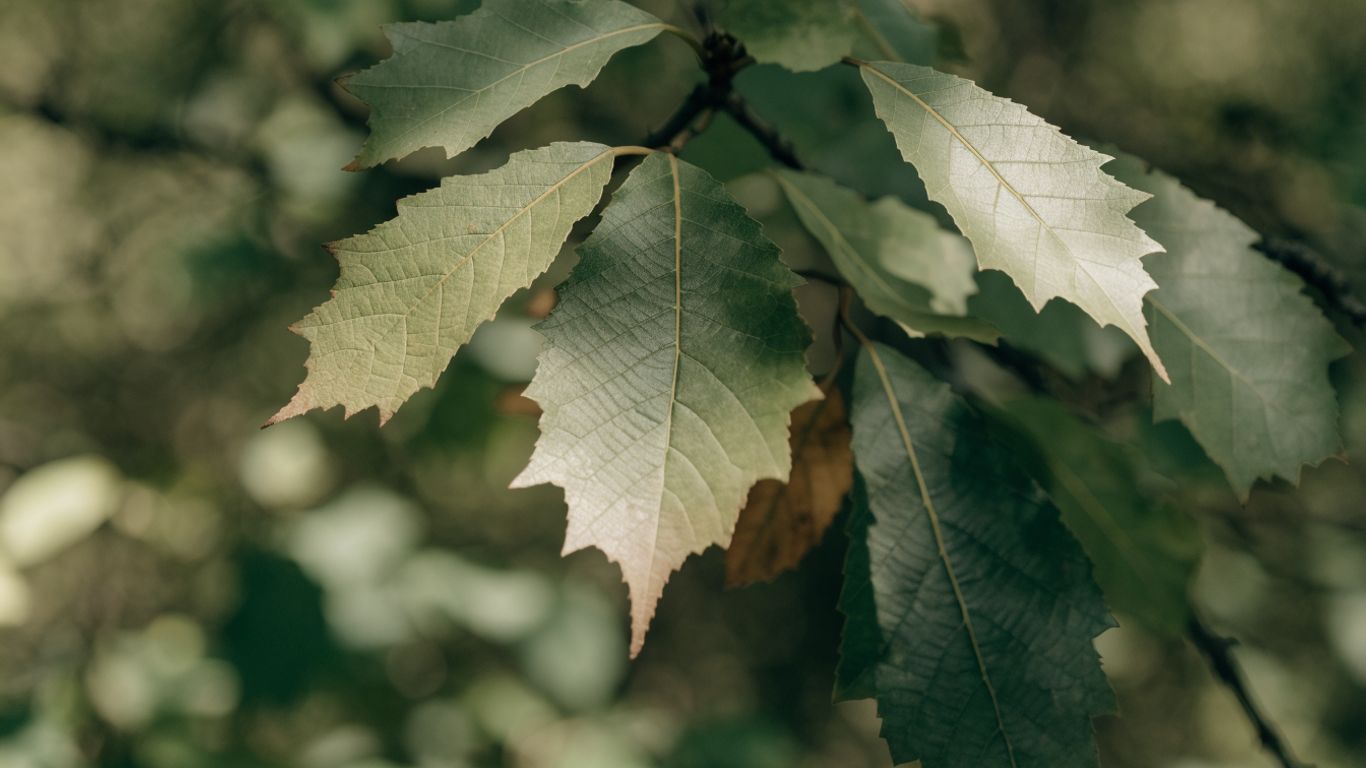
Oak wilt disease in Ontario is treated as a serious invasive threat because it behaves much like Dutch elm disease did on elms: once it is established in an area, it can move from tree to tree through roots and insects. Unlike the emerald ash borer, which is an insect, oak wilt is a fungus, although small beetles help carry it. It is one of several tree diseases affecting Ottawa-area trees, and one of the few where the timing of routine pruning makes a direct difference.
Oak Wilt Ontario Cases: Where It Has Been Confirmed
The first Canadian detection was confirmed in June 2023 on a residential property in Niagara Falls, after an arborist recognized the symptoms and reported them. Two more detections followed the same year, in the Township of Springwater in Simcoe County and in the Town of Niagara-on-the-Lake.
The CFIA placed movement restrictions on the affected properties and put an active management plan in place to eradicate the disease at those sites. According to the CFIA’s plant health survey report, follow-up surveys around the three sites in 2025 did not detect oak wilt.
The pressure from across the border remains. Oak wilt is established in 24 U.S. states, including Michigan, Ohio, Pennsylvania, and New York, and moved firewood is one of the most likely ways for it to reach new parts of the province. Suspected cases in Ontario are reported to the CFIA by email at OakWiltReportingOntario-Fletrissementduchene@inspection.gc.ca.
Which Oak Trees Are Most at Risk?
All oak species can be infected, but the two main oak groups respond very differently.
| Oak group | Common Ontario species | Typical response to oak wilt |
|---|---|---|
| Red oak group | Red oak, pin oak, black oak | Most susceptible. Can die within 2 to 12 months of infection, and severe cases within a few weeks |
| White oak group | White oak, bur oak, swamp white oak | More resistant. Usually declines branch by branch over several years |
Red oak and bur oak are among the most common oaks in Ottawa yards, parks, and rural woodlots. If you are not sure which group your tree belongs to, the leaves are the quickest clue: oaks in the red group have pointed lobes with small bristle tips, while oaks in the white group have rounded lobes. Trees with recent wounds, trees growing close to other oaks of the same group, and trees whose roots were disturbed by construction carry the highest risk.
Oak Wilt Symptoms: How to Identify an Infected Oak
Oak wilt symptoms usually appear between June and August. No single sign confirms the disease, so look for a combination of symptoms and for how quickly they progress.
Leaf Discolouration and Wilting
Infected leaves turn dull green, bronze, or yellow-brown. On red oaks, the discolouration typically starts at the leaf tip and outer edges and moves inward toward the midrib, often leaving a sharp line between green and brown tissue. Symptoms usually begin at the top of the crown and work downward, affecting whole branches rather than scattered leaves.
Early Leaf Drop in July and August
A healthy oak holds a full canopy through July. Leaves falling in July or August, including leaves that are still green or only partly brown, are one of the clearest signs of oak wilt. A red oak can lose most of its canopy within a few weeks. Dated photos taken from the same spot every few days make the rate of change easy to show an arborist.
Fungal Mats and Vertical Bark Cracks
On infected red oaks, the fungus can form grey, white, or black mats just under the bark, usually in spring or fall. These mats push the bark outward and create vertical cracks in the trunk and large branches, and they may give off a sweet, fruity smell. Prying off bark to look for them creates a fresh wound, so photograph any cracks and leave the inspection to a professional.
Tree Problems That Look Like Oak Wilt
Several common problems can be mistaken for oak wilt:
- Drought and leaf scorch: browning appears first on the most exposed side of the tree, usually after a hot, dry stretch.
- Oak anthracnose: irregular brown spots and blotches after a cool, wet spring, often worst in the lower crown.
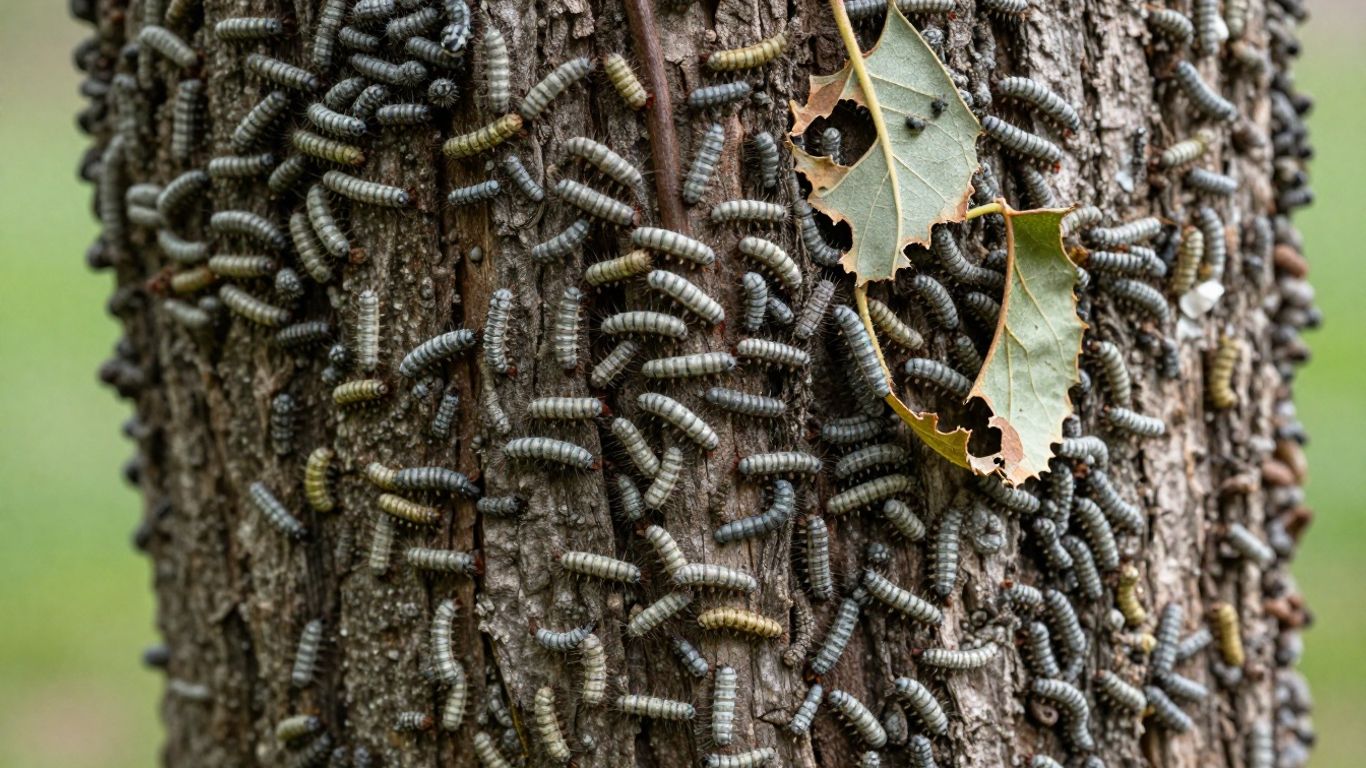
- Insect defoliation: leaves are chewed or missing rather than wilted, as with spongy moth damage.
- Root damage: dieback on the side of the tree where digging, grading, or paving took place.
Only a laboratory test can confirm oak wilt, which is why a professional tree health and risk assessment is the best first step when an oak declines suddenly.
How Oak Wilt Spreads
Oak wilt moves in three main ways, and each one shapes the oak wilt Ontario prevention advice that follows.
Sap Beetles and Fresh Tree Wounds
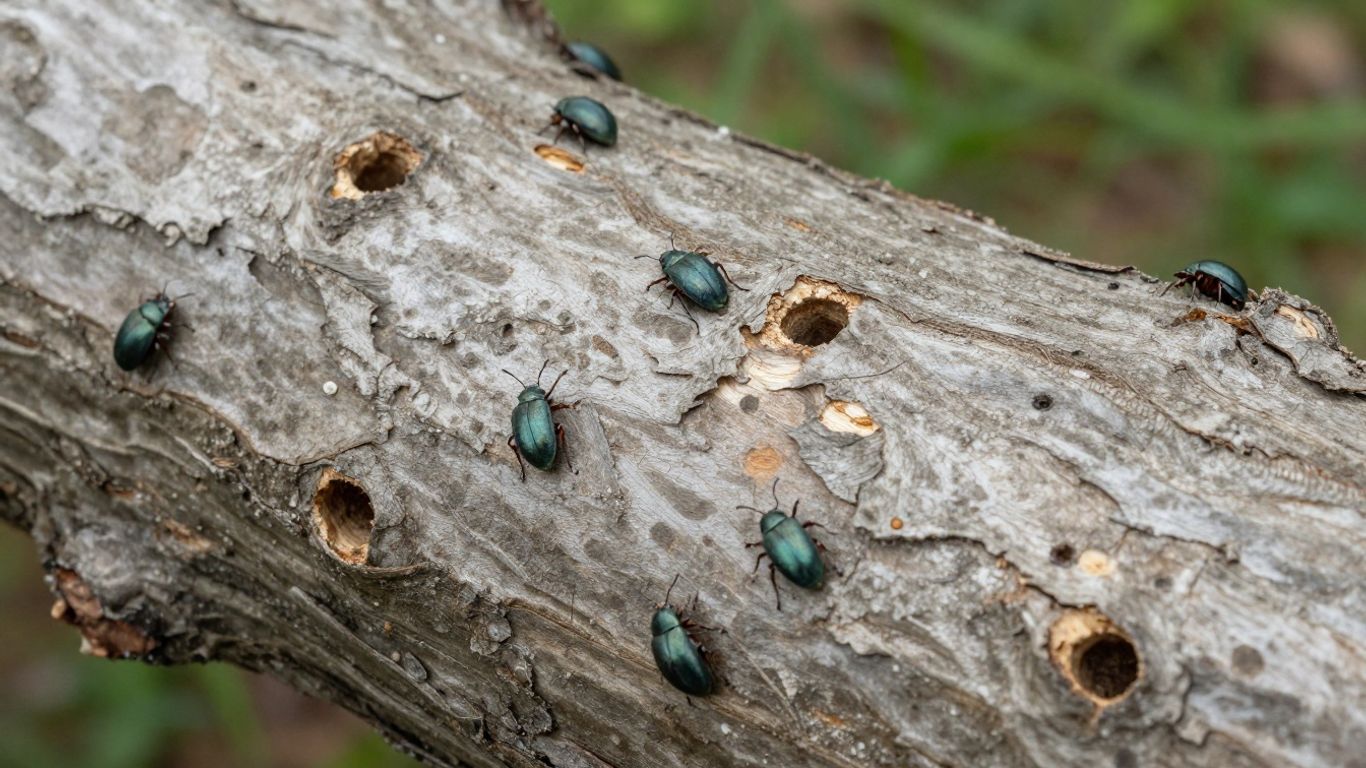
Small sap-feeding beetles feed on the fungal mats and pick up spores. They are strongly attracted to the scent of sap from fresh wounds on healthy oaks, so when they visit a new pruning cut or a storm-broken branch, they can deliver spores directly into the tree. Wounds from lawnmowers, string trimmers, and construction equipment create the same risk, especially in spring and early summer.
Connected Root Systems Between Oaks
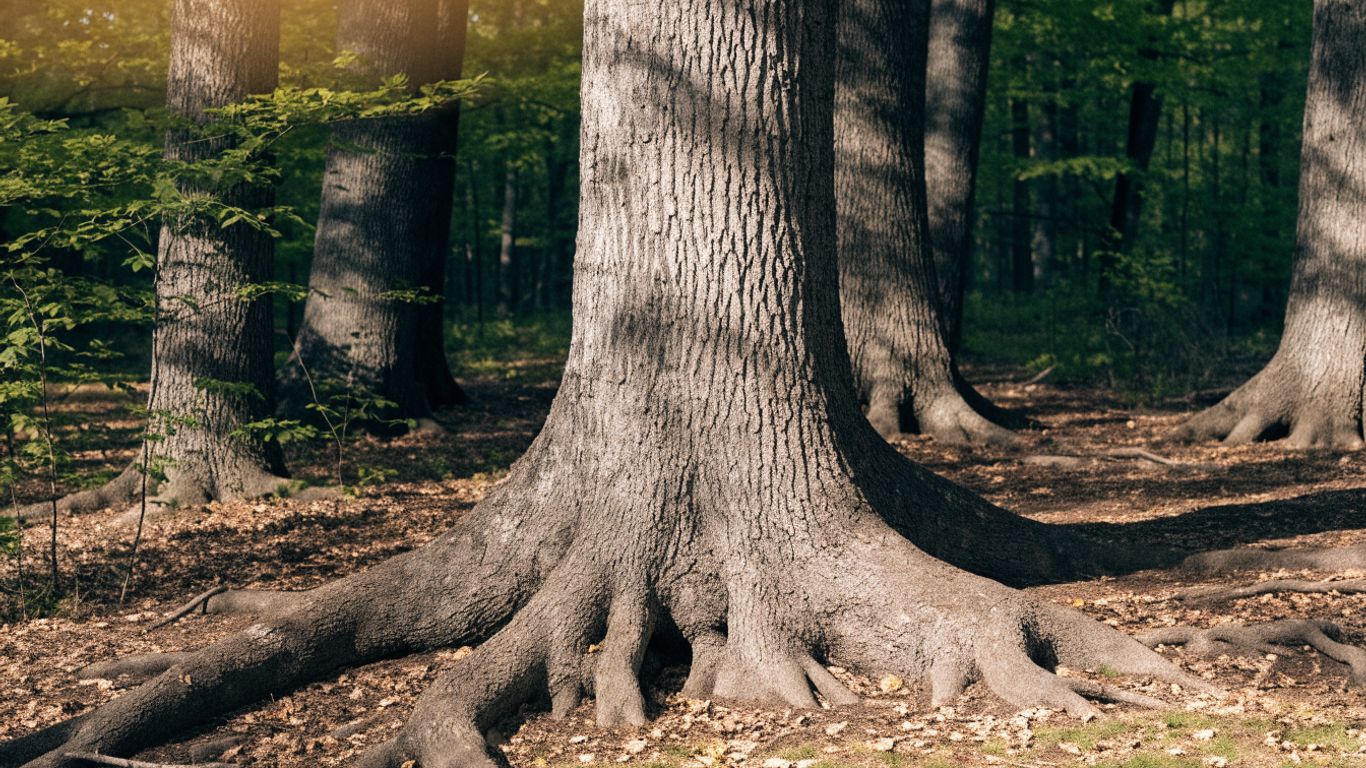
Oaks growing close together, especially of the same species, often have roots that grow together underground. The fungus can travel through these connections from an infected tree to its neighbours, and it can survive in the roots of a dead oak and move into nearby trees. This is why oak wilt often appears as an expanding pocket of dying oaks. Digging through roots to stop it without official direction can make the problem worse.
Moving Firewood and Logs
People are the main way oak wilt jumps long distances. Firewood or logs from an infected oak can carry the fungus to a new area, where local beetles then spread it. Buying firewood where you plan to burn it, and never bringing oak wood home from another region, removes this risk.
When to Prune Oak Trees in Ontario
The safest time to prune oak trees in Ontario is between November and March, while the trees are dormant and the sap beetles that spread oak wilt are inactive. The Government of Ontario identifies April to the end of July as the highest-risk period and recommends avoiding pruning or wounding oaks from April through November whenever possible.
If an oak must be cut during the growing season, for example after storm damage or to remove a safety hazard, cover the wound with a thin layer of wound paint or shellac right away. This is one of the few situations where sealing a pruning cut is recommended, because the coating masks the scent that attracts beetles.
Winter work also has practical advantages in the Ottawa area. With the leaves off, the branch structure is easy to assess, and frozen ground protects lawns and root zones from equipment. A simple way to plan oak work:
- Routine shaping, clearance, and deadwood removal: book for November to March.
- A storm-broken or hanging limb in summer: have it removed promptly, with a clean cut sealed the same day. Emergency tree removal crews can handle urgent hazards.
- A declining oak with symptoms: have it assessed before any cutting, since pruning an infected tree can spread spores.
Planning tree pruning for late fall or winter protects the tree while still giving you all the benefits of good structural pruning.
Oak Wilt Prevention: 6 Ways to Protect Your Oak Trees
When it comes to oak wilt Ontario risks, prevention is far easier than control. These six habits cover the main ways the disease enters a property:
- Schedule oak pruning for the dormant season. Book oak work between November and March.
- Seal accidental wounds the same day. Storm breaks or equipment damage between April and November should be covered with wound paint or shellac immediately.
- Keep firewood local. Buy firewood where you burn it, and never move oak firewood between regions.
- Protect trunks and roots. Keep mowers and trimmers away from the trunk, avoid compacting soil over the root zone, and maintain a ring of wood chip mulch around the base.
- Keep oaks vigorous. Water during dry spells and address stress early. A tree and plant health care program helps trees cope with pests, disease, and drought.
- Inspect and report. Check the upper crown in July and August for wilting or falling leaves, and report anything suspicious to the CFIA.
How an Arborist Checks a Declining Oak
A sudden decline in an oak can have several causes, so a careful inspection looks at the whole tree and its surroundings before anyone calls it oak wilt. A typical on-site check by an ISA Certified Arborist covers five things.
- Reading the crown from the ground. Oak wilt usually starts in the upper crown and moves down. Drought scorch tends to show first on the most exposed side, and root damage often lines up with the side where digging took place.
- Looking closely at the leaf pattern. Browning that moves from the leaf tip and edges toward the midrib, with a sharp line between green and brown tissue, points toward a vascular problem. Scattered irregular spots after a wet spring are more typical of anthracnose.
- Checking the trunk and major limbs. The arborist looks for vertical cracks, raised bark, and recent wounds, and asks when the tree was last pruned or damaged. A pruning cut made in May or June carries far more risk than one made in January.
- Examining the sapwood. On a symptomatic branch, dark streaking in the outer sapwood can point to a vascular disease, especially in white and bur oaks.
- Mapping nearby oaks. Oaks of the same group growing close together may share root connections, so neighbouring trees are noted and monitored even if they look healthy.
Because only a laboratory test can confirm the fungus, a suspected case is documented and reported to the CFIA instead of being treated on a guess. For a homeowner, the value of the visit is a clear answer on whether the tree is stressed, diseased, or hazardous, and what should happen next. Booking an ISA Certified Arborist early also gives you a record of the tree’s condition if it needs to be reported.
What to Do If You Suspect Oak Wilt on Your Property
If an oak on your property shows symptoms, follow the official oak wilt Ontario reporting steps and act carefully:
- Do not prune, cut, or remove the tree yourself. Fresh cuts and moving wood can spread spores to healthy trees.
- Take photos from the ground. Capture the whole crown, close-ups of affected leaves, and any bark cracks, and note the date and the tree’s location.
- Report it to the CFIA. Email OakWiltReportingOntario-Fletrissementduchene@inspection.gc.ca with your photos and the address of the tree.
- Book an arborist assessment. A certified arborist can rule out look-alike problems and check nearby oaks.
- Follow official direction if oak wilt is confirmed. Management of confirmed cases typically includes removing infected trees and stumps, chipping, burning, or burying the wood, and breaking root connections to nearby oaks.
If the tree is dead or hazardous, keep people away from it until it can be dealt with safely. Professional tree removal in Ottawa and stump grinding make sure the work and the wood handling follow the required steps. Larger trees in Ottawa may also need a permit, so review the Ottawa tree protection bylaw before any removal.
Is Oak Wilt a Concern in Ottawa and Eastern Ontario?
The confirmed Canadian detections to date are in southern Ontario, and none of those sites are in the Ottawa area. That does not make Eastern Ontario risk-free. Oaks are common across the region, from city streets in Ottawa to woodlots around Arnprior and Kemptville, and the disease is established in neighbouring U.S. states.
For Ottawa-area property owners, the same precautions apply: prune oaks in winter, seal any summer wounds, keep firewood local, and watch for wilting or leaf drop in July and August. Keeping up with oak wilt Ontario updates from the CFIA and the Government of Ontario, and reporting suspicious trees early, is what keeps isolated cases from becoming a regional problem.
Protect Your Oak Trees with Advanced Tree Solutions
Advanced Tree Solutions is a locally owned tree care company that has served the National Capital Region since 2011, with ISA Certified Arborists and Tree Risk Assessment Qualified (TRAQ) staff on the team. Services for oak owners include dormant-season oak pruning, tree health and risk assessments, plant health care, and safe removal of dead or hazardous trees across Ottawa and the surrounding communities, including Kanata, Stittsville, Manotick, Kemptville, Carleton Place, Almonte, and Arnprior.
The essentials are simple: learn the symptoms, prune oaks between November and March, keep firewood local, and report anything suspicious. If an oak on your property is declining, you have questions about oak wilt Ontario risks, or you want winter pruning booked before the high-risk season starts, call 613-299-3150 or contact Advanced Tree Solutions to schedule an assessment.
Frequently Asked Questions
How fast does oak wilt kill an oak tree?
It depends on the oak group. Red oaks, such as red, pin, and black oak, can die within 2 to 12 months of infection, and severe cases can kill a tree within a few weeks. White oaks and bur oaks are more resistant and often decline branch by branch over several years.
Can a tree with oak wilt be saved?
There is no cure for oak wilt. Infected red oaks usually die, while trees in the white oak group may survive for years with gradual dieback. Once oak wilt is confirmed, the priority shifts to protecting nearby healthy oaks by following CFIA direction on removal, wood handling, and breaking root connections.
Do I need to seal pruning cuts on oak trees?
Only when an oak is cut or damaged between April and November. In that case, apply a thin layer of wound paint or shellac immediately so the fresh sap does not attract beetles. Cuts made during the winter dormant season, from November to March, generally do not need to be sealed.
Can I keep firewood from a dead oak tree?
If oak wilt is suspected or confirmed, do not keep, move, or burn the wood until you have followed CFIA direction, because wood with bark still attached can carry the fungus. If a healthy oak died from another cause, burn the wood on site or locally, and never move oak firewood to another region.
Who do I report oak wilt to in Ontario?
Report suspected oak wilt to the Canadian Food Inspection Agency by email at OakWiltReportingOntario-Fletrissementduchene@inspection.gc.ca. Include clear photos of the crown, leaves, and any bark cracks, the date symptoms appeared, and the tree’s address. Avoid pruning or moving any wood from the tree while you wait for a response.